
Parasocial [ par-uh–soh-shuhl ]
adjective
- of or relating to the connection or imagined connection between a regular person and a fictional character, celebrity, or other public figure:
Part of having a favourite video game is the parasocial interaction that you get with the characters you come to know.
Fans naturally project their values into parasocial relationships, but they are bound to be disappointed one day when their idols aren’t who they’ve built them up to be.
I do want to stress, Parasocial relationships aren’t always bad, there are good parts we see this everyday within the playerbase whether it’s harmless forms such as fanart, fanfiction, cosplay, fan interactions on social media pages.
Why Players Get Attached: The Psychology of Parasocial Relationships
Have you ever wondered why certain players become emotionally invested in your game—or even in you as a developer? It all ties back to the psychology behind parasocial relationships. When players spend hours immersed in a game, they often form strong emotional connections with the game world, its characters, and even the development team.
What drives players to idolize game developers? Several factors contribute to this phenomenon. Some players aspire to work in the gaming industry and see developers as role models. Others seek to stay informed about their favorite games and hope to gain insights from developers’ social media accounts. Most gamers use video games as a source of comfort and emotional release, forming strong bonds with the game and its developers. For them, developers are seen as individuals who share their values and opinions, creating the safe space they cherish within the virtual world. This sense of shared values can further drive the idolization of the development team.
Some players may develop an intense attachment to a game or its developers, leading them to obsessively track the developers’ online activities. They might believe that by getting closer to the developers, they can strengthen their connection to the game.
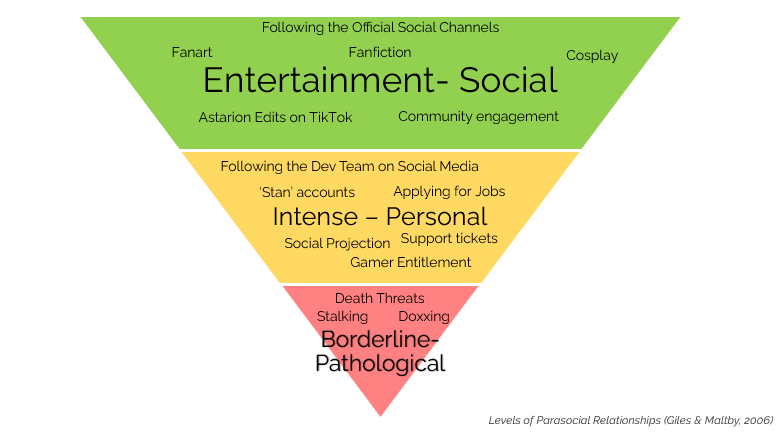
Not all parasocial relationships are equal. In 2006, researchers David Giles and John Maltby classified parasocial relationships into three subcategories: entertainment-social, intense-personal, and borderline-pathological. At each level, there is an increasing belief that the fan is in a personal relationship with the character, game, developer, or studio.
Entertainment-social relationships involve players being attracted to a source, fictional or not, because it provides entertainment and serves as a root of social interaction and gossip among peers. At this level, the parasocial relationship is relatively impersonal, such as through fan art, fanfiction, cosplay, or TikTok videos.
The next level is intense-personal, which reflects intense, compulsive feelings toward the source, sometimes bordering on obsessive. For example, a player in an intense-personal parasocial relationship might consider a developer a personal friend simply because they interact on social media or believe their opinion holds special weight if a studio resolves a bug they reported outside official channels.
The final and most intense level is borderline-pathological. This level is characterized by uncontrollable behaviors and delusions about the source. For instance, a fan might think, “If I call this developer’s number that I found on LinkedIn/Google, they’ll appreciate my suggestions for the game.”
Setting Boundaries: Safeguarding Game Dev Teams from Parasocial Pitfalls
While parasocial relationships can foster a sense of community, they can also blur the lines between fans and developers. Setting boundaries is crucial to protecting your team from the potential emotional toll of these relationships. Without boundaries, developers can feel overwhelmed by the pressure to meet player expectations or respond to personal messages.
Boundaries serve as protective walls surrounding your studio. They aren’t meant to isolate your team from the community but rather to empower them to engage positively while safeguarding their well-being. When developers feel safe and respected, they can focus their energy on what they do best—creating remarkable gaming experiences.
Setting boundaries is like drawing a line in the sand, indicating what is acceptable and what isn’t in terms of interactions between developers and players. While many aspects of these boundaries may seem like common sense, it’s essential to define and communicate them explicitly to maintain a healthy and respectful environment.
Social media has become a powerful platform for developers to connect with players. Equip your team with resources for engaging with the community outside of official channels. These guidelines should include advice on handling difficult interactions, canned responses for common player inquiries, redirection links to official channels, and a brand kit outlining what can and cannot be discussed regarding projects. Ensure these resources are accessible, especially after hours, when a community manager may not be present.
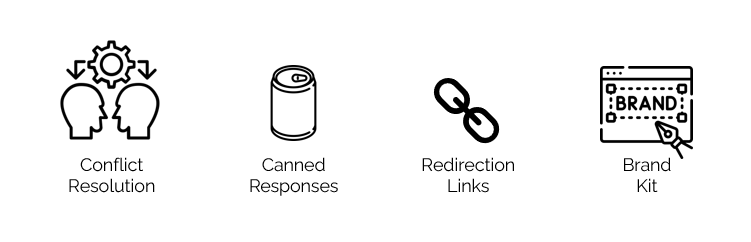
It’s important to stress that these measures aren’t about policing your team’s social accounts but providing a safety net for when unsavory interactions arise, such as on weekends or when boundaries are overstepped.
Basically…
As rewarding as it can be to connect with your community, there’s a darker side to parasocial relationships. Some players may take their attachment too far, resulting in toxic behaviors like entitlement, doxxing, or stalking. These extreme forms of parasocial relationships can take a significant emotional toll on developers.
While you can’t fully prevent these situations, you can mitigate the risks. By fostering transparency, setting firm boundaries, and encouraging positive community interactions, you can create a healthier space for both developers and players.
Equip your development team with the tools, training, and support they need to navigate community interactions safely and confidently. By investing in your team’s well-being and resilience, you fortify their ability to create exceptional gaming experiences.
Sources:
Labrecque, L.I. (2014) Fostering consumer–brand relationships in social media environments: The role of Parasocial Interaction, Science Direct. Available at: https://www.sciencedirect.com/science/article/abs/pii/S1094996813000650 (Accessed: 30 July 2023).
Baek, Y. M., Bae, Y., & Jang, H. (2013). Social and parasocial relationships on social network sites and their differential relationships with users’ psychological well-being. Cyberpsychology, behavior and social networking, 16(7), 512–517. (Accessed: 30 July 2023).
Raskin, R., & Terry, H. (1988). A principal-components analysis of the narcissistic personality inventory and further evidence of its construct validity. Journal of Personality and Social Psychology, 54, 890–902. Accessed: 30 July 2023).
Coyle, D.N. (2021) The psychology of yelling at game developers, Platinum Paragon. Available at: http://platinumparagon.info/yelling-at-game-developers/ (Accessed: 31 July 2023).
Caccamise, S. (2021) Parasocial relationships are the social media downfall everyone is talking about, StyleCaster. Available at: https://stylecaster.com/parasocial-relationships-meaning/ (Accessed: 04 August 2023).
 Cassie McD